Remembering the Armenian Genocide 111 years later
SEIU 1021 member Cynthia Landry recalls how her grandmother escaped the death marches
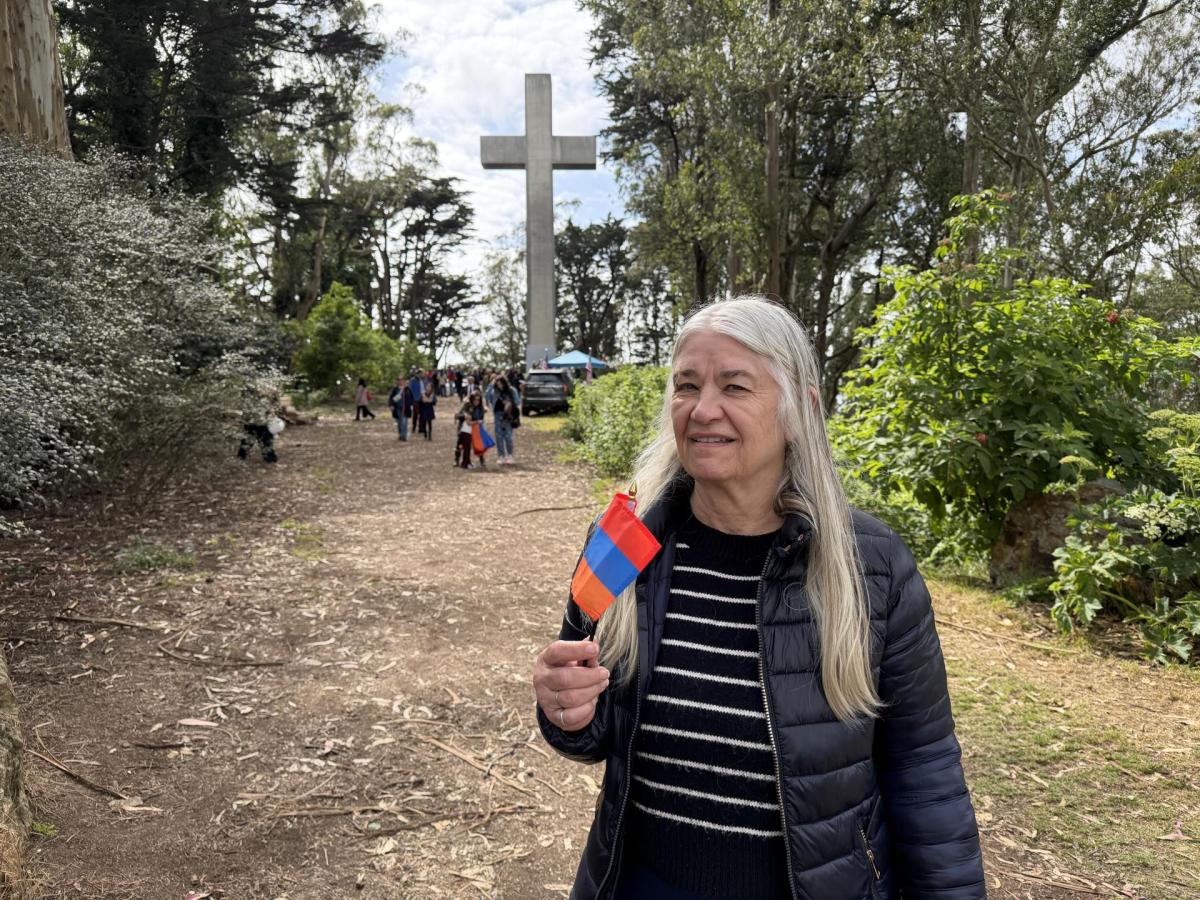
SEIU 1021 member and social worker for Alameda County Social Services, Cynthia Landry, always had “the fight” in her. She was raised by a strong-willed, progressive matriarch where she grew up in Boston, Massachusetts. Her East Coast accent, light-colored hair and eyes framed by darker brows make it hard to distinguish her roots, so Landry proudly shares that she is half Armenian.
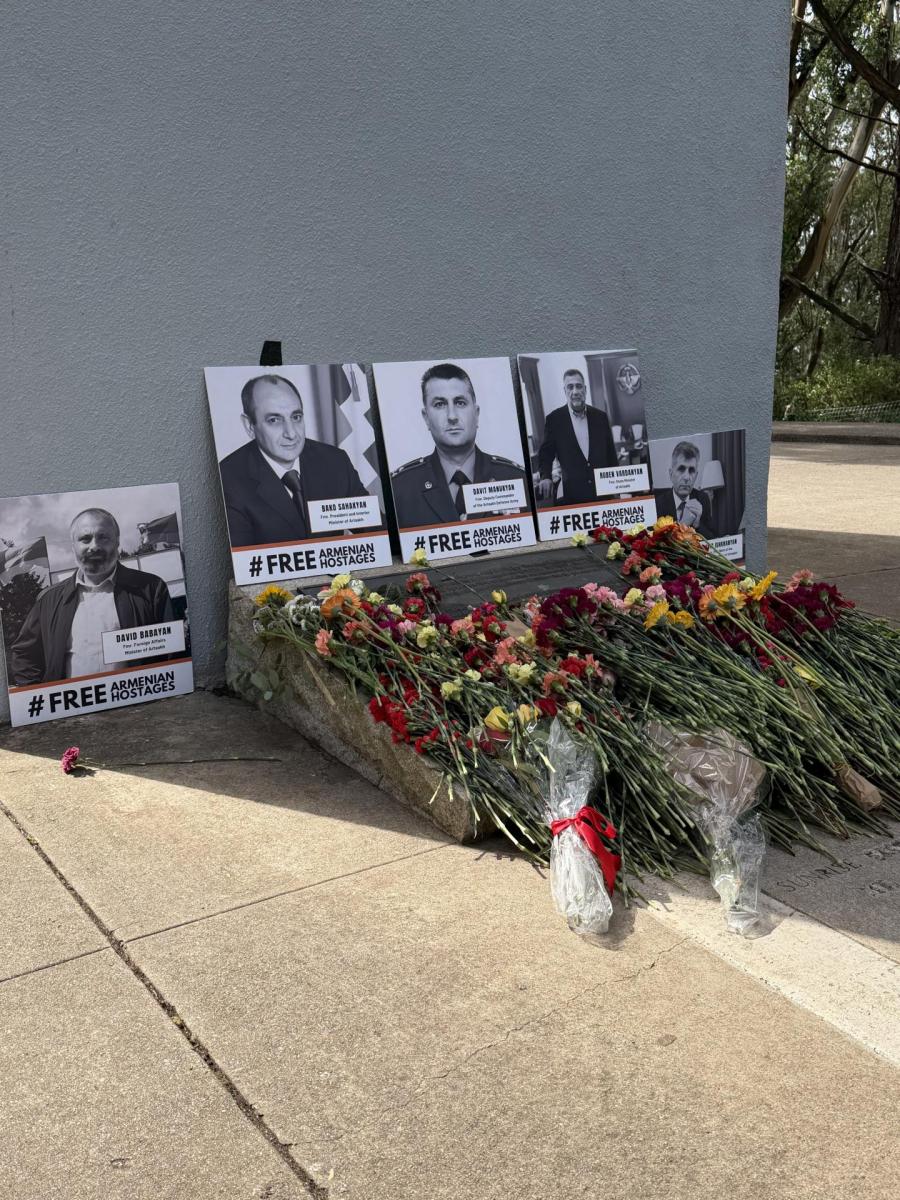
On Sunday, April 26, she made her way to the top of Mount Davidson in San Francisco where at the base of a huge concrete cross, people gathered to pay their respects in honor of the 111th Armenian Genocide Commemoration. The event held every year reflects on the 1.5 million Armenians, Assyrians, and Greeks who were killed by the Ottoman Empire (present day Türkiye) during World War I, between 1915 and 1923. Armenians were subjected to mass deportations, death marches into surrounding deserts, and widespread violence. This resulted in the destruction of ancient communities and created a global diaspora, with an estimated more than 600,000 Armenians calling California their home.
Landry is one of them.
Her grandmother Rose Stepanian would share bedtime stories as Landry quietly gazed at a cross tattoo on her arm. About how Turkish soldiers targeted Christians and came to her home to order her family to leave with just the clothes on their backs. They were forced to march endlessly into the desert with no known destination. Her grandma said they walked aimlessly for months until finally her mother collapsed from exhaustion and malnourishment and died before her very eyes. The soldiers ordered Rose to walk away, but she insisted on burying her own mother while faced with the threat of the tip of a bayonet.
“She prayed a lot,” Landry said. “It wasn’t until I attended a talk at UC Berkeley years later in my life that I learned this ‘death march’ was designed to wear them down. A map tracked how they walked in circles.”
Rose’s father had already emigrated to the United States years before the genocide after catching wind of the rising danger to Armenians in Anatolia. So after her mom died, Rose decided to take her chances and run away from the refugee camp in the middle of the night. She made her way to Constantinople, now Istanbul, feeding on what scraps she could find. There, she got on a boat that stopped in Egypt and India before arriving at Ellis Island around 1919.
“Armenians were perceived as a threat,” explained Landry. “They were bright and studious. Many of them were entrepreneurs and educated professionals. My grandmother valued education very much, and when she got to the U.S., she went night school while her husband watched the kids so that she could become a naturalized citizen, which I am very proud of. She voted in every election, taking me with her. She voted Democrat and loved F.D.R., so she would have been called a progressive, I guess.”
Landry never learned the Armenian language nor was exposed to many of the hallmarks that make a culture its own. But what her grandmother was able to pass down was resilience.
“She instilled in me a lot of perseverance; I think that’s true to say about Armenian folks. I am a social worker, and I consider myself compassionate and resilient.”
For ten years, her grandmother wore black when Landry was growing up. “Can you wear another color?” she would ask. “Eventually, she lightened up to navy blue then medium blue…I think that it’s probably a form of generational trauma. Indirectly, I always fear abandonment myself.
“I think that adversity has no boundaries, and right now, there are a lot of people going through hardships. There’s displacement in the Middle East and countries that were previously safe. We need to learn to understand, or at least be open to understanding, the adversity and trauma that individuals and the whole world are going through. We have to learn to cooperate so wars and genocide and displacement are no longer…we need to get rid of war, period, and learn to take the time to understand and respect other people, knowing that many people may have hardships that you may not be able to see,” advised Landry.
“We have to get out of these wars wasting human capital instead of building folks up. We need to support each other, work out our differences, and respect one another.”