

California Gig Workers Union takes major step to represent gig rideshare drivers throughout the state
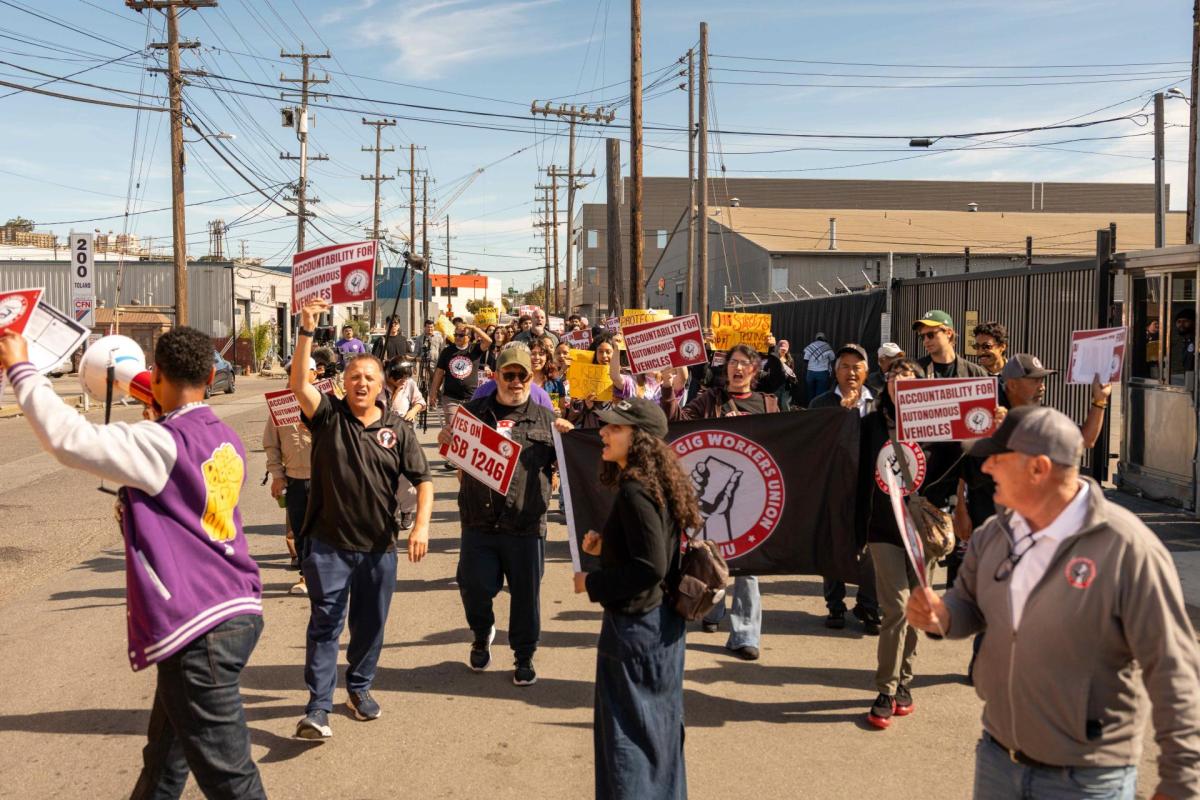
At a press conference today, Tuesday, May 12th, gig drivers from around the state announced that they filed a petition with the state requesting that the California Gig Workers Union (CGWU) represent them in collective bargaining negotiations with rideshare companies — a milestone in drivers’ effort to unionize under California’s newly enacted Assembly Bill 1340 (AB 1340). Over several months, drivers have collected tens of thousands of signatures from fellow gig workers seeking to form a union with CGWU. The drivers will announce they submitted their proof of union support (drivers’ union authorization cards) to the Public Employment Relations Board (PERB), the state agency responsible for implementing and enforcing collective bargaining rights for rideshare drivers in the state.
AB 1340, which took effect on Jan. 1, 2026, establishes a legal framework allowing app-based drivers working for companies such as Uber and Lyft to choose a union to represent them and to join together to negotiate over wages, benefits, and working conditions.
Drivers united in CGWU were instrumental in passing AB 1340, flooding Sacramento to speak with lawmakers about its significance and the low pay and unfair working conditions that drivers for Uber and Lyft face. Additionally, CGWU gig drivers have been leading membership drives and outreach efforts across the state — spearheading the largest movement to unionize gig drivers in U.S. history.
“This is a historic moment for gig drivers,” said Hector Castellanos, a gig driver from Antioch. “For more than a decade, we have been fighting to have basic protections and now we’re on the path forward, and today we are one step closer to getting to the bargaining table with the world’s largest gig corporations.”
After PERB verifies that CGWU has met the 10% threshold, all covered gig drivers will receive a notice of the organizing effort and their rights under the law. CGWU must then demonstrate that at least 30% of active transportation network drivers have chosen them as their representative or CGWU must win an election. Upon meeting that requirement, gig drivers with CGWU as their bargaining representative could begin negotiations for labor agreements with rideshare companies.
AB 1340 marks one of the most significant expansions of collective bargaining rights since the creation of the National Labor Relations Act.
According to a study from the UC Berkeley Labor Center, the median wage of California gig drivers is about $5.97 per hour without tips and $7.63 per hour with tips. With rising gas prices, gig drivers have been sounding the alarm on how they are struggling to make a living. Gig drivers have also advocated for increased safeguards on autonomous vehicles — or robotaxis — to ensure safety for all drivers on the road.
“Having a union and a voice in the gig economy is about fairness and transparency,” gig driver Ayana Sampier from California City added. “Drivers deserve a seat at the table and a say on the future of an industry built on our backs.”
“As part of California Gig Workers Union, we’ve talked to thousands of drivers over the years, and more and more of us want the same thing: to stand up to the companies that are driving up prices for passengers while taking even larger shares of the fares,” said Harvin Melendez, a rideshare driver from Santa Monica. “Seeing gig drivers sign up by the thousands shows that it’s real, and that we’re ready to have a union that knows what being a gig driver is all about and that’s been fighting for workers for a long time.”