

Tenderloin Housing Clinic Workers to Rally to Demand Management Address Critical Safety Concerns
Management’s failure to prevent or address violence & other safety hazards, combined with unlivable wages and poor benefits, have created a revolving door of staff
**MEDIA ADVISORY FOR THURSDAY, JAN. 15**
Contact: Jennie Smith-Camejo, (510) 710-0201, jennie.smith-camejo@seiu1021.org
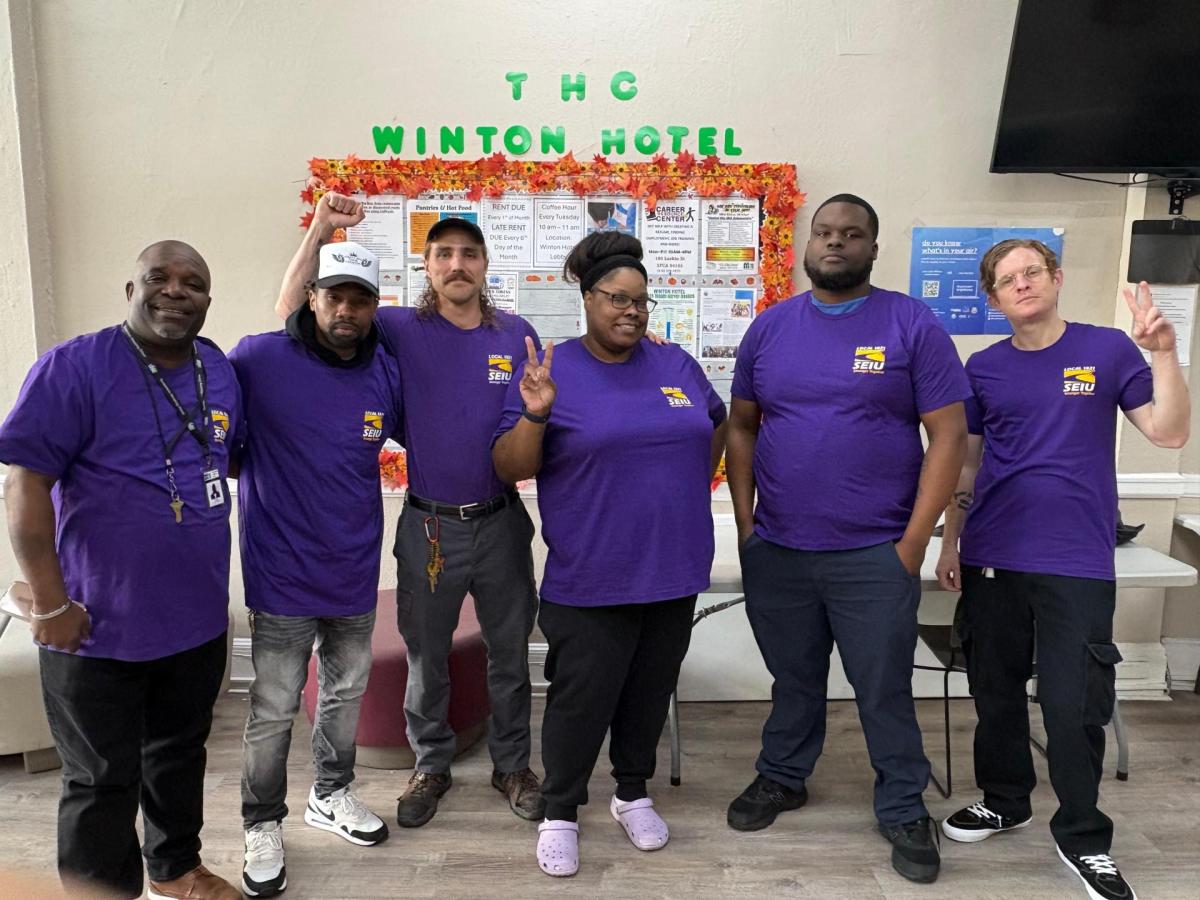
Workers at Tenderloin Housing Clinic work with some of San Francisco’s most vulnerable residents transitioning out of homelessness at city-funded SROs. Helping them get them back on their feet is rewarding. But the job also comes with unique challenges: verbal threats and intimidation; unsanitary and unsafe working conditions, including frequent sewage leaks contaminating hallways and common areas and syringes found in room cleanups; and even actual physical violence. They do the job because they care about their community. Yet management’s failure to seriously address their safety concerns, combined with wages that are far below the San Francisco living wage and mediocre benefits, has led to very high turnover and chronic short staffing that make the work even more difficult and unsafe, and erode progress and trust with clients.
Thursday, they will be rallying outside of THC headquarters during their lunch break, protesting management’s refusal to negotiate fair safety policies and livable wages. SF Supervisor Bilal Mahmood will join them after 12 p.m.
What: Picket and rally
When: Thursday, Jan. 15, 11:30 a.m.-1 p.m. (program at 12
p.m.)
Where: THC headquarters, 449 Turk St., SF
Who: THC workers (case managers, desk clerks, janitors, and
others); SF Supervisor Bilal Mahmood will be joining the
picket
Visuals: Workers in union purple marching with picket signs,
chanting, short program around 12 p.m.
Mark Malley has been a case manager at THC for eight months. “I was homeless myself for part of my adolescence. I took a six-figure pay cut to come to work here because this is exactly what I want to do—serve people who are homeless or have chronic illnesses or disabilities. I want to be here in the thick of it dealing with the most difficult clients. But THC management does not create sustainable working conditions. We deal with extreme violence, with clients who are always getting into fights or are dealing with psychosis. None of us have medical certifications; there are no social workers. When we try to get management’s attention, nothing happens—or at most, they move staff to another hotel, rather than actually addressing the problem. Almost all the case managers I started with eight months ago have left.”
After taxes, rent, and bills, Malley is left with about $60 a month in discretionary income. The living wage for a resident of San Francisco without children is $29 an hour; case managers for THC start at $28, with no salary schedule for upward mobility or to reward longevity, just small yearly cost-of-living adjustments based on the cost-of-doing-business increases given by the city (this year, 1%). Desk clerks start at $22 an hour, janitors at $23—both below the $25 minimum wage for SF city workers.
“People are constantly quitting because we have to deal with violent tenants,” said Hattie Patterson, who has been a desk clerk for THC for 13 years. “They can disrespect us verbally, make threats. We get so much disrespect, and no support from managers, no support from the company itself. I really like what I do, and some of the tenants make the work rewarding. But THC’s executive team needs to seriously address these issues of workplace safety for this to be a sustainable job.”
###
SEIU Local 1021 represents nearly 60,000 employees in local governments, nonprofit agencies, health care programs, courts, and schools throughout Northern California, including seven private colleges and numerous community colleges. SEIU Local 1021 is a diverse, member-driven organization with members who work to make our cities, schools, colleges, counties, and special districts safe and healthy places to live and raise our families.